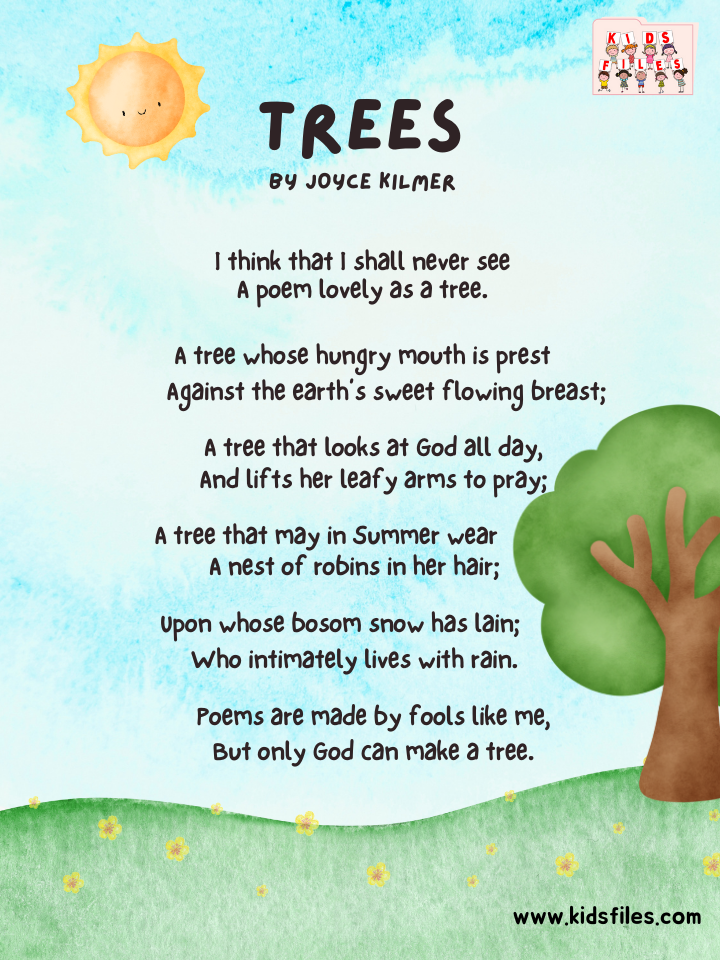
Poems can help children slow down, listen, and picture things in their minds. One poem that works well for young readers is Trees by Joyce Kilmer. The lines are short and gentle. The images are clear and easy to imagine. The poem shows how a tree can feel calm, strong, and full of life. It reminds us that nature is not just from nowhere. There is a Creator behind all these things around us. There is a God. When we share this poem with children, we help them notice the beauty in simple things they see every day. We also help them see that these gifts come from someone who is greater, and that is God.
We like using this poem because it opens many paths for learning. Children can hear the rhythm of each line. They can act out the movements as they listen. They can talk about the meaning in simple words. They can draw or write based on the pictures they imagine. Each activity builds a different skill. The poem also gives us a gentle way to talk about nature, seasons, weather, and feelings. At the same time, it helps us guide children toward gratitude for God as our creator.
Ways to Teach this Poem
- Read the Poem
We can use the Trees poem in many simple ways when we teach it to children. The poem is short and calm. It shows strong images that are easy for young readers to understand. We start by reading the poem aloud. We keep our voice steady and clear so each line is easy to follow. We do not rush. We want the children to hear the rhythm and notice the gentle tone. If we want to give more support, we can show the Kids Files YouTube video. The video offers a clear model of how the poem should sound. Children often learn well when they hear a smooth and steady recitation. When we repeat the reading in later sessions, they begin to say the lines with more confidence.
- Use Body Movements
As we read, we guide the children through simple actions. These movements do not need to be big. Small and slow actions work better because they keep the focus on the words. When the poem says the tree “lifts her leafy arms to pray,” we let the children raise their arms. When the poem talks about a nest of robins, we let them point to their head. When the poem mentions snow or rain, we let them make small hand motions to show weather. These actions help them picture the scenes in the poem. They also help them stay engaged. Some children learn through movement, so this step supports different types of learners.
- Ask Questions
After the reading, we ask short questions. We make the questions easy to answer so children feel safe to speak. We may ask, “What did the tree look like?” or “Which line did you like the most?” We can also ask, “Why do you think the poet loved trees?” These small questions help children think about meaning. They also help us check their understanding. When they answer, we listen with care and guide them when needed. We give them time to think so they do not feel rushed.
- Writing Activity
A writing or drawing task works well after the discussion. We let the children choose between the two. Older children may write one or two lines about a tree they have seen. They may write what season they like or how the poem made them feel. Younger children may draw a tree in rain, snow, or summer. They may draw birds on branches or leaves moving in the wind. Both tasks help them express their ideas. Writing builds language skills. Drawing builds recall and creativity. Both options support learning in a gentle way.
When we teach the poem, we do not need complex tools. We only need the text, a clear voice, and a few minutes of time. We can use the Kids Files YouTube recitation to support the reading. From there, we can shape the lesson in many ways that fit our group, our schedule, and our goal for the day. Hearing the poem more than once builds strong recall. The video also supports children who learn better through sound. Some kids focus more when they hear a voice instead of only reading printed text. Using both the video and a printed chart gives visual and audio support.
We have a YouTube video on our KIDS FILES channel where we recite “Trees.” We invite parents and teachers to watch the video with their children and then let the kids try the actions on their own. You may use our videos for more practice at home or in class.
More Activities for this Poem
- Vocabulary Building
Vocabulary building is another helpful step. We select a few words from the poem and give short meanings. We choose clear and simple definitions so children can remember the words. Words like lovely, leafy, robins, and bosom may be new for them. We explain each word with ease. We may also give a quick sentence that uses the word. When we explain the phrase “earth’s sweet flowing breast,” we tell them it means the soft ground that gives food to the tree. We avoid long or complex explanations. Simple meanings help children build a strong word base.
- Pronunciation Practice
We can also practice pronunciation. We read hard words as a group. We break the words into small parts and say them slowly. The children repeat after us. This helps them gain confidence in speaking. Many children enjoy reading aloud when the pressure is low. Clear practice also helps when they recite the poem later. They know how the words sound, so they read with more ease.
We can use body movement again when we repeat the poem. This time, we add actions to match each line. The movements help keep the group focused. They also make the poem feel alive. Some children enjoy leading the actions for the class. This builds confidence and gives them a small leadership role. It also helps them learn the poem faster.
There are more ways we can support children during this lesson. We repeat the poem across a few days so the lines become familiar. We let children take turns reading a part of the poem. We offer praise for a clear voice, a straight posture, and good focus. We remind them that poetry does not need big or hard words. Simple images, like a tree, can show deep meaning. When children understand this, they become more open to poems and more willing to read them again.

Teaching the Trees poem gives us a quiet and meaningful way to guide children through sound, movement, and nature. The poem is easy to use, and each activity helps build confidence in speaking, listening, and imagining. We invite you to try these steps at home or in your classroom. You may use our Kids Files video, our guides, and our printables to support your lesson. If you enjoy this poem activity, we welcome you to explore more resources on our website and visit our YouTube channel for more child-friendly learning videos.

Learn more About Kids Files