This poem is a simple way to help children learn about their bodies. It uses clear words and easy actions. Young kids understand it fast. You can read it aloud or show it on screen. Kids enjoy hearing words that match what their bodies can do. The poem talks about hands, arms, fingers, legs, and eyes. Each line connects to a real action. This helps learning feel real and fun.
When kids hear the poem, they start to move. They clap their hands. They hug their arms. They snap their fingers. They jump with their legs. They point to their eyes. These movements help kids remember the words. It also helps them connect language with action. This is helpful for early learners. It works well for preschool and kindergarten children.
We’ve created a YouTube video on our KIDS FILES channel where we read the All of Me Poem. We encourage parents and teachers to watch the video with their children and then have the kids perform the actions themselves.
Watch the video here:
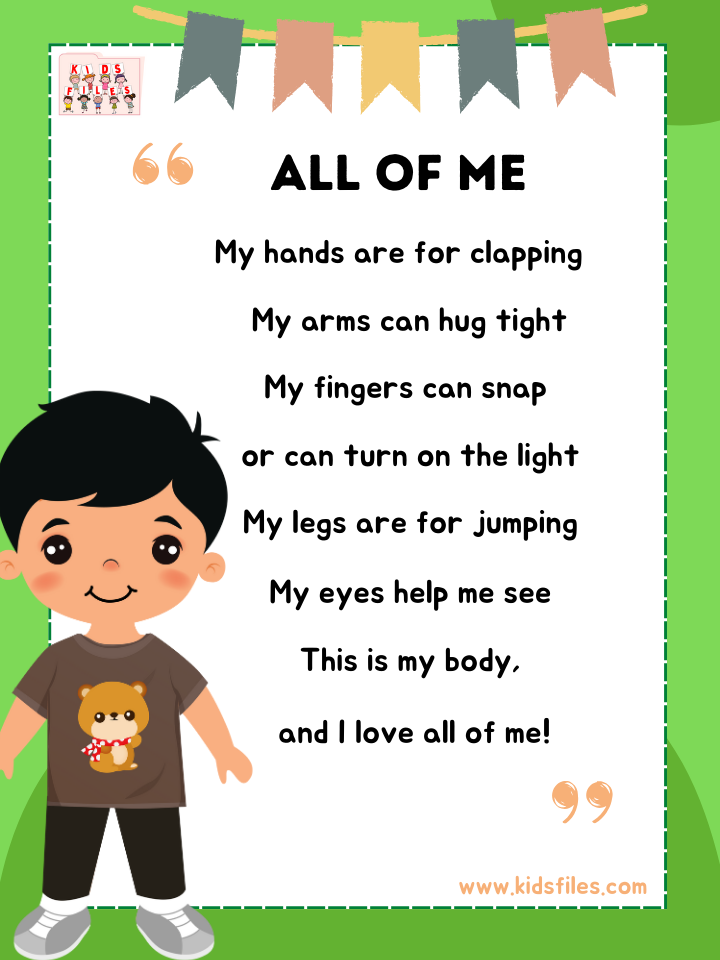
All Of Me Lyrics
My hands are for clapping
My arms can hug tight
My fingers can snap
or can turn on the light
My legs are for jumping
My eyes help me see
This is my body,
and I love all of me!
You can use this poem at home or in the classroom. You do not need special tools. You only need time and attention. Read the poem slowly. Pause after each line. Let children copy the action. Some kids may need help at first. That is okay. Repetition helps. Reading the poem again builds comfort and confidence.
This poem also supports body awareness. Kids learn what each body part can do. They begin to notice how their bodies move. This supports self-care and self-respect. It helps kids feel proud of themselves. The last line reminds children to love who they are. This is an important message for young learners.
If you want more support, you can use the video that goes with this poem. Watching the poem helps visual learners. Kids see the actions while hearing the words. This makes learning easier. You can watch the video together. You can pause it when needed. You can repeat parts that children enjoy most.
After reading or watching, talk with your child. Ask simple questions. Ask what body part they like best. Ask what their hands can do. Ask what their legs help them do. These questions help kids think. There is no right or wrong answer. Let them share freely.
How to Use the All of Me Poem in Your Classroom or Home
Step 1: Read the Poem
Share the poem with children by reading it aloud or by showing them our Kids Files YouTube video where we perform and read the poem.
Step 2: Interactive Engagement
As you read the poem, encourage kids to act out the movements that correspond to each body part. For example, they can stomp their feet, clap their hands, and touch their nose.
You can also turn this poem into a movement game. Say one line at a time. Do the action together. Make it playful. You can clap louder. You can jump higher. You can hug tighter. Laughter helps learning stick. Movement helps kids stay focused.
Step 3: Ask Questions
After reading, ask children questions like, “What other things can your hands do?” or “Can you think of another body part to add to the poem?” This promotes creative thinking and extends the learning experience.
Step 4: Writing Activity
Have kids write or draw their favorite part of the poem and describe other things their body can do. This helps reinforce what they’ve learned and encourages further exploration of their abilities.
Writing and drawing activities work well with this poem. Ask children to draw their favorite part. Ask them to draw themselves jumping or clapping. Older kids can write a short sentence. They can say what their body can do. This helps with fine motor skills. It also supports early writing practice.
Vocabulary Building
Let’s look at the key words from the poem and learn what they mean:
Clapping – The action of bringing your hands together to make a sound.
Hug – To wrap your arms around someone to show love or affection.
Snap – A quick sound made by your fingers when you press them together.
Jumping – The action of pushing your body into the air using your legs.
See – The action your eyes perform to look at things.
Pronunciation Practice
The rhythm and rhyming words in this poem are great for practicing pronunciation.
Try saying these words aloud:
Clap / Snap
Hug / Jump
See / Me
Encourage learners to repeat after you, focusing on the sounds.
The poem also helps with vocabulary. Words like clap, hug, snap, jump, and see are common action words. These are useful in daily speech. Say the words clearly. Let kids repeat them. Focus on sound and rhythm. This helps with pronunciation.
Body Movement Activity
Since the poem is all about body parts and actions, why not turn it into a fun physical activity?
Here’s how:
Clap your hands as you say “My hands are for clapping.”
Hug yourself when you reach “My arms can hug tight.”
Snap your fingers when you say “My fingers can snap.”
Jump around when you read “My legs are for jumping.”
Point to your eyes when saying “My eyes help me see.”
You can practice rhyming words from the poem. Clap and snap sound alike. Jump and hug are action words. See and me rhyme. Point this out to children. Keep it simple. Rhymes help kids hear patterns in language.
This poem fits well into daily routines. You can use it during circle time. You can use it before playtime. You can use it as a short break between lessons. It does not take long. A few minutes is enough. Short activities work best for young children.
You can also extend the poem. Ask children to add new lines. Ask what their feet can do. Ask what their ears help them do. Let them make their own verse. This builds creativity. It also helps kids feel included.
The poem works well for group activities. Children enjoy doing actions together. It builds social skills. They learn to follow along. They learn to wait their turn. Group movement helps with listening skills too.
Parents can use this poem at home. You can read it before bedtime. You can read it in the morning. You can read it during playtime. There is no wrong time. Learning can happen anytime.
This poem supports early learning goals. It helps with language growth. It supports movement skills. It builds body awareness. It supports emotional growth too. Kids learn to accept themselves. They learn to value their bodies.
You do not need to explain everything. Let the poem do the work. Kids learn best through simple words and actions. Keep the mood light. Keep the pace slow. Let kids enjoy the moment.
If a child does not want to join right away, that is fine. Some kids like to watch first. Give them time. They often join later. Never force movement. Comfort matters. You can repeat this poem often. Repetition builds learning. Kids enjoy familiar words. Each time they hear it, they learn more. They may notice new details. They may move with more confidence. This poem also works well with worksheets. After reading, kids can match body parts. They can color pictures. They can trace words. This adds another layer of learning. It helps connect ideas. Using poems like this supports early reading skills. Kids learn that words have meaning. They learn that text can be fun. This builds a love for reading. That love starts early.
Teachers can use this poem during lesson plans. It fits well in health topics. It fits well in language lessons. It fits well in movement breaks. It is flexible and easy to use. Homeschool families can use this poem daily. It does not need setup. It works with mixed ages. Older kids can help younger ones. This builds confidence for both.
The message of the poem is simple and strong. Every body part matters. Every child matters. Loving yourself starts young. Simple words can carry big meaning. This poem also helps kids build routine. When children know what comes next, they feel safe. Repeating actions helps with memory. It also helps with focus. You can also connect this poem to real life. When a child claps, remind them of the poem. When they jump, say the line again. This helps learning move beyond the page. The goal is not perfection. The goal is connection. Connection to words. Connection to movement. Connection to self.
Learning should feel safe and fun. This poem supports that idea. It gives kids space to move. It gives kids words they understand. It gives kids a reason to smile. You can adjust the pace based on the child. Some kids like slow reading. Some like fast movement. Follow their lead. Learning works best when kids feel heard. Using poems in early learning builds strong habits. Kids learn to listen. They learn to respond. They learn to express themselves. These skills matter later in school. This poem is short, but its impact is strong. It fits into many learning styles. It supports visual, audio, and physical learners. You do not need to add more words. Keep it simple. Keep it clear. Let kids lead the way. At the end of the activity, remind children of the last line. Loving all of me is important. This helps build healthy self-talk. It starts early.
Thank you for using Kids Files. I hope this poem brings joy to your learning space. Learning grows best one small step at a time.