Children learn best when ideas are presented in a fun and meaningful way. This short poem about the five senses introduces young learners to sight, hearing, taste, smell, and touch in a way they can easily remember. Whether you’re teaching in the classroom, reviewing with your child at home, or adding a warm-up activity to your lesson, this poem is a simple and joyful resource you can use anytime. Below you’ll find the poem, a free printable, and a video reading kids will love.
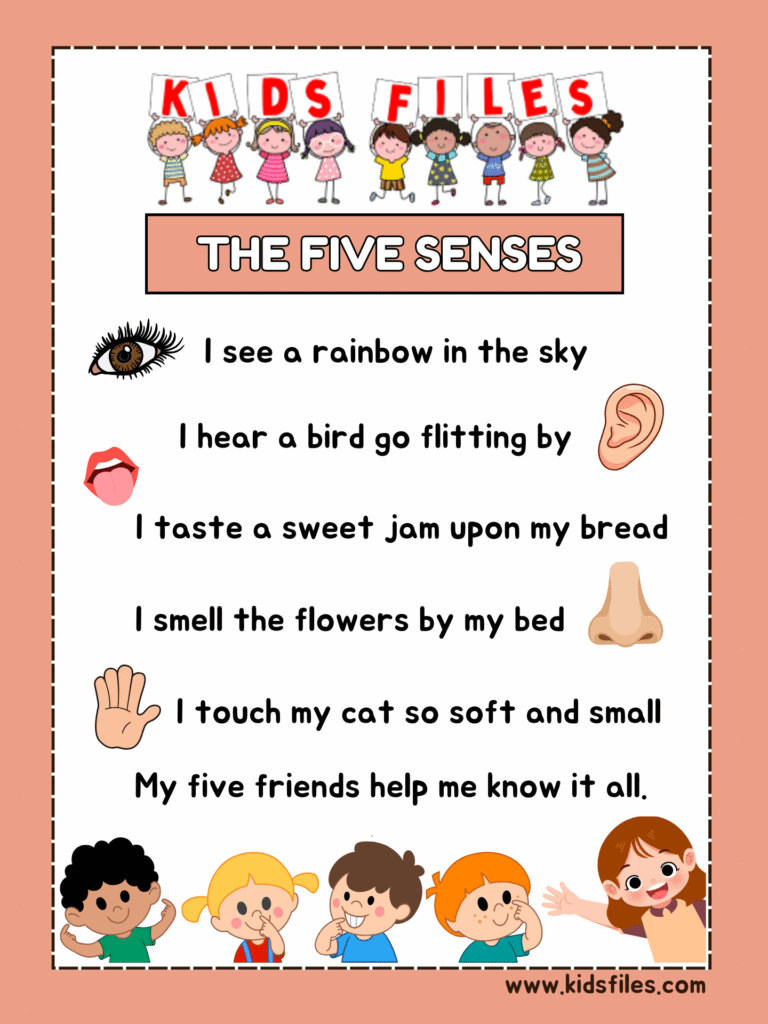
We use this short poem to teach kids the five senses in a calm and clear way. The poem has simple lines that young learners can follow with ease. Each line points to one sense and shows a scene that kids can picture in their minds. The poem talks about a rainbow, a bird, sweet jam, flowers, and a soft cat. These images are familiar to most kids. They help the child link each sense with real things they see at home or outdoors. We use this poem because it works well in many settings. We can use it during circle time, reading time, or free time. We can also use it during homeschool or play sessions. The short length makes it easy to use even when time is limited.
We give a free chart that shows the full poem. Kids can use the chart to read along as the poem is shared in class or at home. The chart also helps teachers and parents who want to print the poem and place it on a wall or in a learning folder. A child can point to each line as they say the words. This builds early reading skills. It also helps kids learn to match spoken words with written words. The chart is kept simple so kids do not feel lost when they read it.
The Five Senses
I see a rainbow in the sky
I hear a bird go flitting by
I taste a sweet jam upon my bread
I smell the flowers by my bed
I touch my cat so soft and small
My five friends help me know it all.
We also share a Kids Files video where we read the poem out loud. The video allows kids to hear the poem with a steady pace and clear voice. Kids can watch before the activity, during the activity, or after the activity. They can replay it many times until they know the rhythm of each line. Hearing the poem more than once helps them gain strong recall. The video also helps kids who learn better through sound. Some kids focus more when they hear a voice instead of only looking at printed text. The mix of video and printed chart gives both visual and auditory support.
We’ve created a YouTube video on our KIDS FILES channel where we recite the “The Five Senses Poem”. We encourage parents and teachers to watch the video with their children and then have the kids perform the actions themselves. You may watch our videos for more practice.
We use this poem because it fits well with theme lessons about the five senses. Many early learners study sight, hearing, smell, taste, and touch. This poem gives a quick and friendly way to open that theme. We can read it as a warm-up before deeper lessons. We can also use it as a closing activity after kids explore objects that match each sense. The poem acts as a guide that helps kids notice how their senses work through daily events. They learn that each sense has a purpose. They also learn that the senses help them understand the world around them.
Ways to Teach this Poem
Step 1: Read the Poem
We start by reading the poem out loud. We keep our voice slow and steady so kids can follow each line. We also play the Kids Files video to help them see the poem and hear its rhythm. This gives them a clear start and sets the tone for the rest of the activity.
Step 2: Body Movements
We add simple movements as we read the poem. We point to our eyes, ears, nose, tongue, and hands. We also act out each short scene, like looking at the sky or pretending to smell a flower. These actions help kids stay engaged and link each sense to a real idea. Movement keeps the group focused and makes the poem easier to remember.
Step 3: Ask Questions
After the poem, we ask short questions to guide their thinking. We ask what they saw, heard, smelled, tasted, or touched that day. These direct questions help kids connect the poem to their daily life. They learn that their senses work all the time, not just during the activity.
Step 4: Writing/Drawing Activity
We follow the questions with a writing or drawing task. Kids draw one object for each sense or write a simple line about it. They might draw a flower they smelled or a bird they heard. This step helps them recall details and gives them a chance to share what they know.
More Activities for this Poem
Vocabulary Building
We teach the key words from the poem by saying them out loud and showing simple pictures. Words like “rainbow,” “bird,” and “flowers” become easier to understand when kids see them. We let them repeat each word to build memory and confidence.
Ponunciation Practice
We also spend a short time on pronunciation. We read each line slowly and let them repeat the sounds. We break long words into parts if needed. This helps kids speak with ease and builds stronger reading habits.
To add more energy, we turn the poem into a short movement activity. We match each sense with one action and let kids follow the pattern. They stand, stretch, and copy each move. This keeps the lesson active and fun, and it strengthens memory through motion.
We support the poem with real objects whenever possible. We bring simple items like fruit, cloth, or flowers so kids can test each sense in real time. We repeat the poem often during the week to help the lines stick. We also remind kids to notice sights and sounds at home, which helps them apply the poem to real moments. Keeping the steps simple and steady helps kids learn with comfort and confidence.
We can connect the poem to hands-on items. We show a flower, a fruit, a soft cloth, or a picture of a rainbow. These objects help kids build strong links between the poem and real life. Kids can hold the objects or smell them. They can touch soft things or look at bright colors. They can listen to bird sounds. These links help kids stay engaged. Kids learn best when they see, hear, and touch real items. The poem becomes more meaningful because it points to things that they know.
We also use this poem because it fits well with short action routines. We can ask kids to point to their eyes when we read the first line. We can ask them to point to their ears when they hear the second line. We can let them pretend to smell a flower or taste bread. We can let them touch their hands to show the sense of touch. These simple actions help kids stay active. The moves also make the poem easier to remember. Kids enjoy acting out words, and it helps them stay focused during the lesson.
The poem helps build strong language skills. Kids learn new words like “rainbow,” “flitting,” “flowers,” and “soft.” Each word can be shown with a picture to help kids understand the meaning. We can repeat the word with a clear voice so kids can match the sound with the idea. This poem also helps with reading because the lines are short and follow a steady pattern. Kids feel safe trying to read because the text is not too hard. When kids repeat the poem often, they gain more confidence in reading and speaking.
Group Game
We choose this poem because it fits a wide age range. Young kids enjoy the simple scenes. Older kids can discuss how their senses help them learn every day. We can also use the poem to open short talks about safety, such as how we hear warnings or see signs. We can link the poem to short drawing tasks, writing tasks, or group games. The poem works for both quiet lessons and active lessons.

We offer the free chart and the free video so kids, teachers, and parents can use the poem in many ways. The poem gives a gentle start to learning about the five senses. It invites kids to look, listen, smell, taste, and touch with awareness. Our goal is to help kids learn with comfort and build steady skills through simple tools, one file at a time! Happy Teaching 

Learn more About Kids Files