Many children are naturally interested in pets, farm animals, wild animals, and sea animals. They enjoy looking at animal pictures, learning their names, and talking about where they live. These free Animal worksheets are designed for preschool and kindergarten learners. The activities help children recognize different animals, learn animal names, match animals to their homes, and notice similarities and differences between animals. The worksheets use simple pictures and easy instructions so young learners can complete the activities with guidance from a teacher or parent.
The worksheets can be used at home, in the classroom, or as part of a homeschool lesson. You can use them to introduce an animal topic, review vocabulary, or give children extra practice after a lesson.
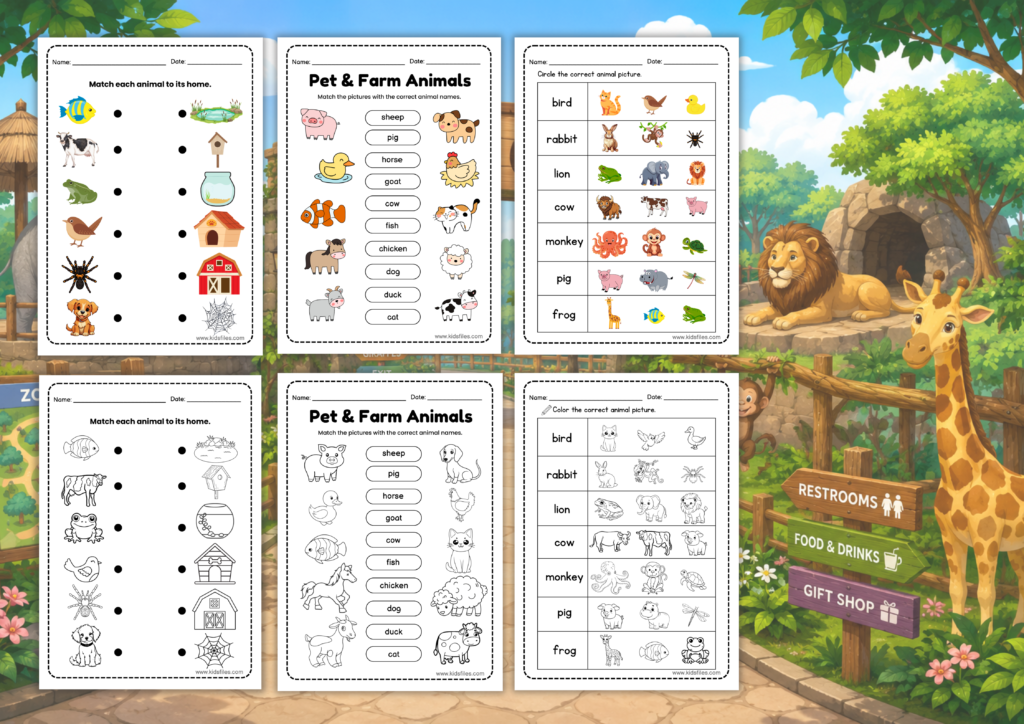
Young children often learn new words more easily when they can connect the word to a picture. Animal pictures give children something familiar and interesting to look at while they learn new vocabulary.
These Animal Worksheets introduce children to different animals through simple picture activities. Children can look at each animal, say its name, and complete the activity on the page. Some worksheets focus on common animals that children may already know, while others introduce animals they may not see in everyday life. Teachers can use the worksheets during a Science or vocabulary lesson. Before children begin, look at the pictures together and ask them to name the animals they recognize. You can also talk about simple animal features. For example, children can notice which animals have wings, fur, fins, or four legs. Parents can use the same approach at home. There is no need to turn the worksheet into a long lesson. Simply talk about the pictures, say the animal names together, and let the child complete the activity.
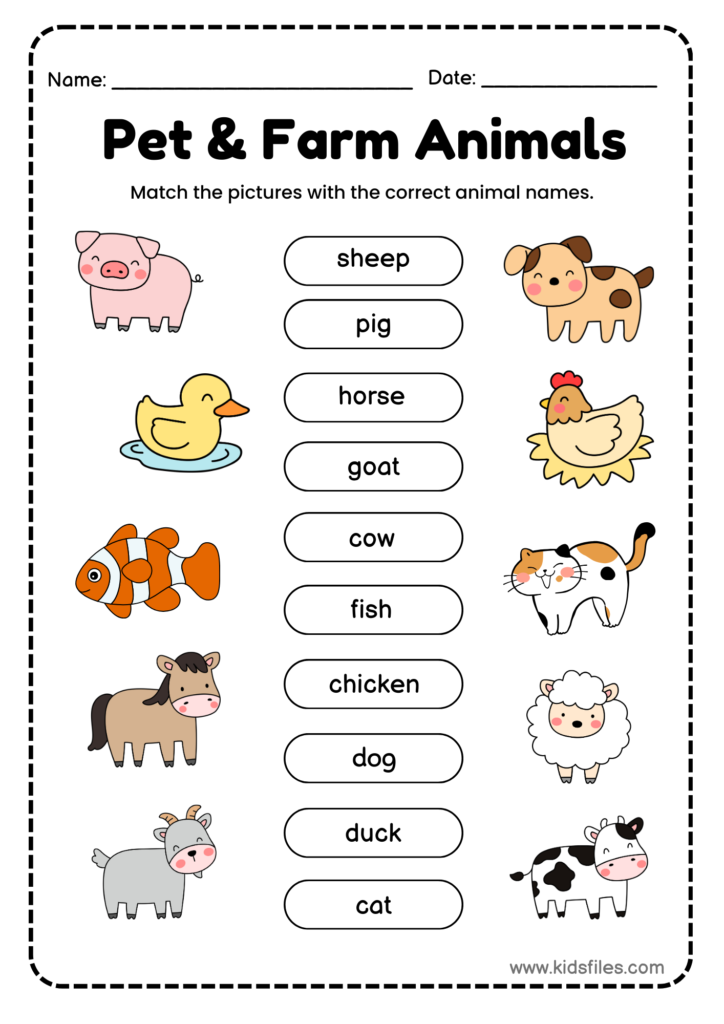
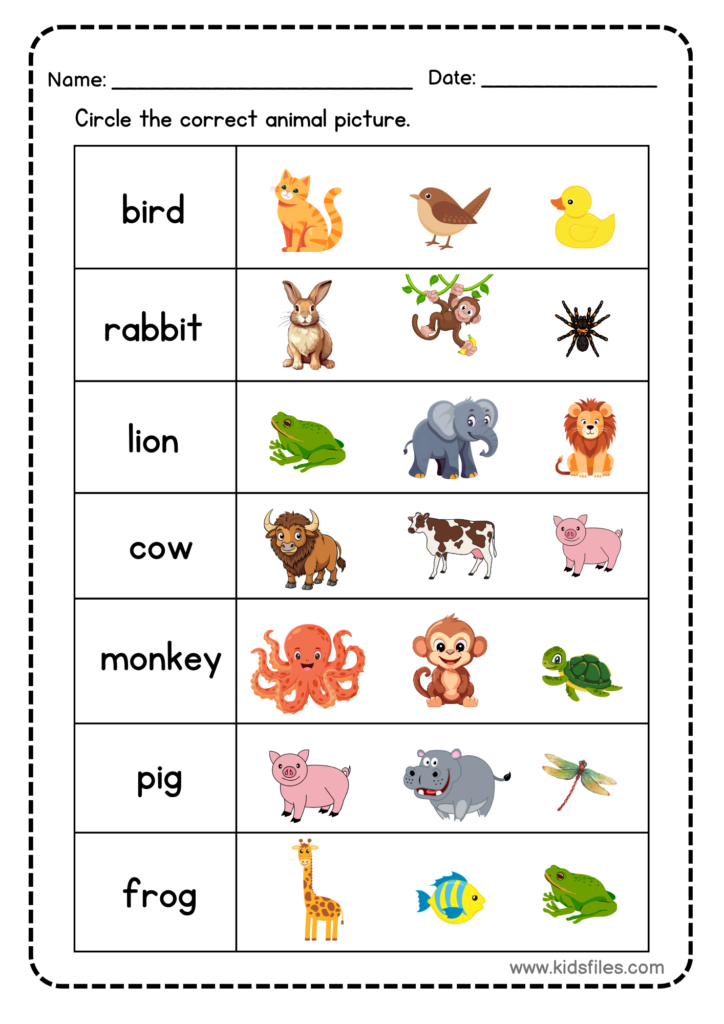
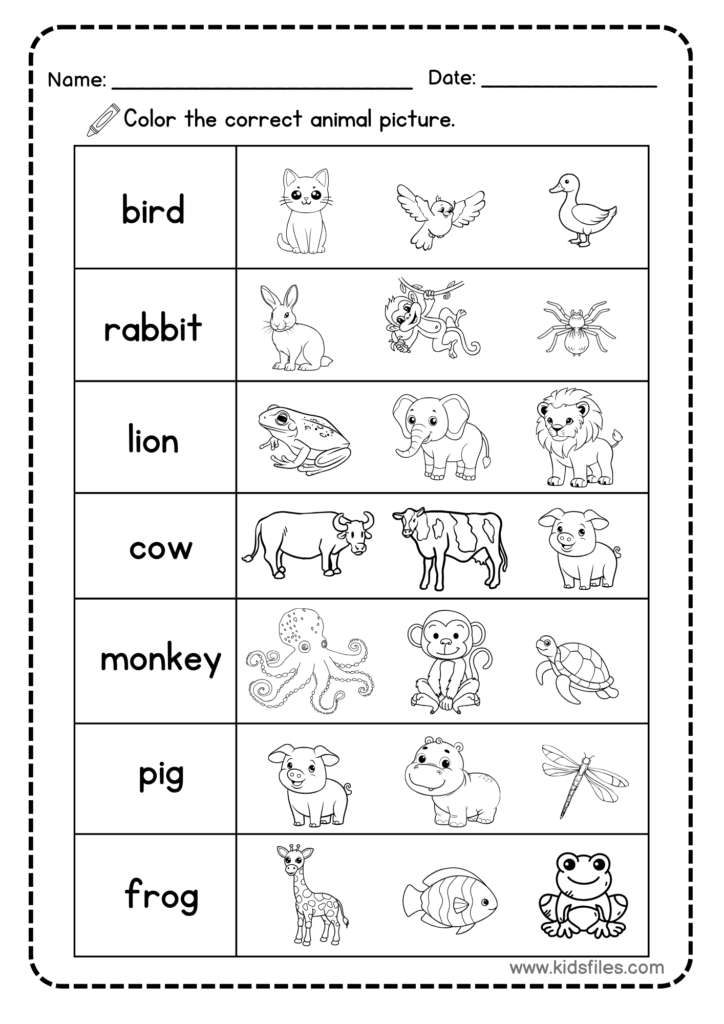
The animal matching activities give children practice in looking carefully at pictures. In one activity, children read or listen to an animal name and choose the correct picture. This helps them connect animal vocabulary with the correct image. For young learners who are not yet reading independently, a teacher or parent can read the animal name aloud. The child can then look at the pictures and choose the correct answer. This makes the activity useful for both early reading practice and listening practice.
Children can also talk about why they chose a particular animal. Simple questions such as “Which one is the cow?” or “Can you find the frog?” encourage children to listen, observe, and respond. These activities can also be used with English language learners. Animal vocabulary is a simple and familiar topic for children who are beginning to learn English. The pictures give them visual support while they learn and remember new words.
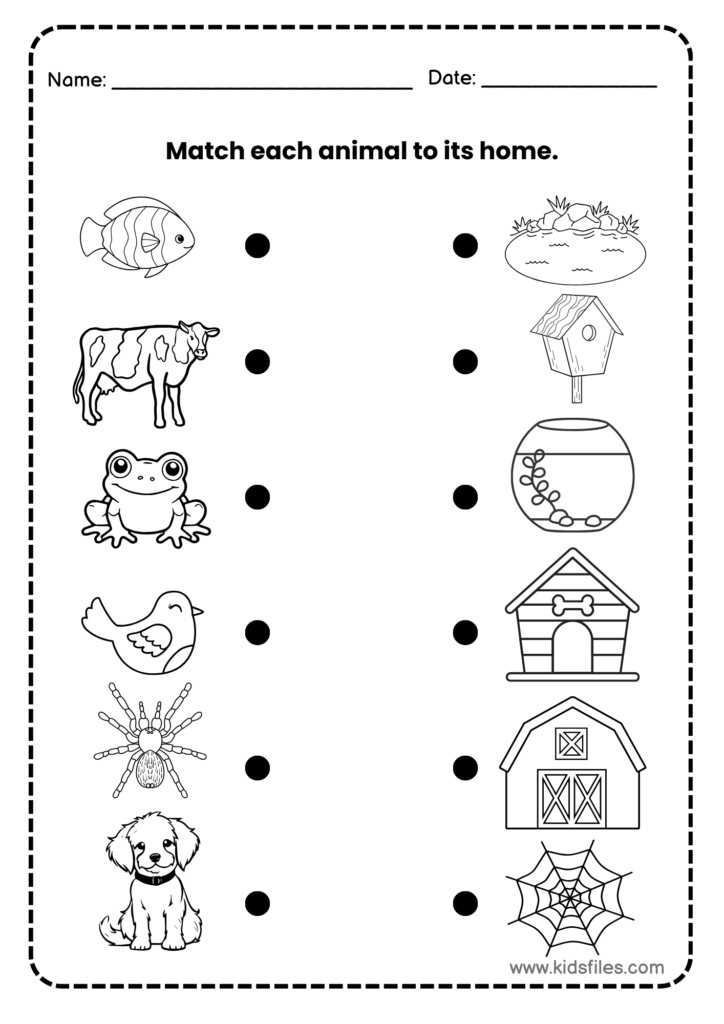
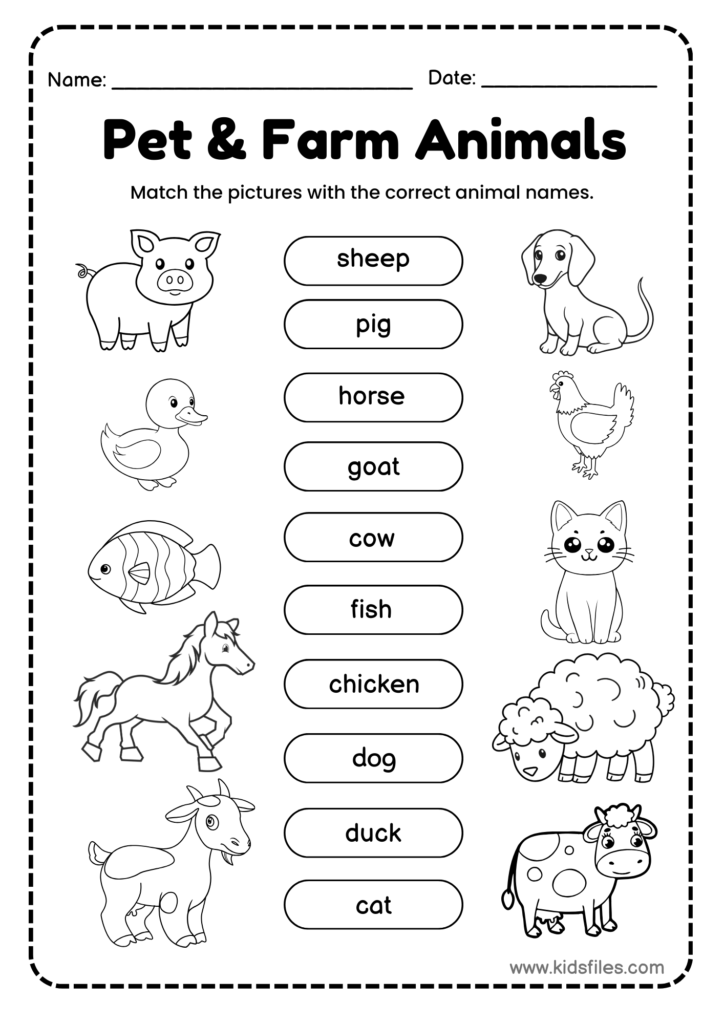
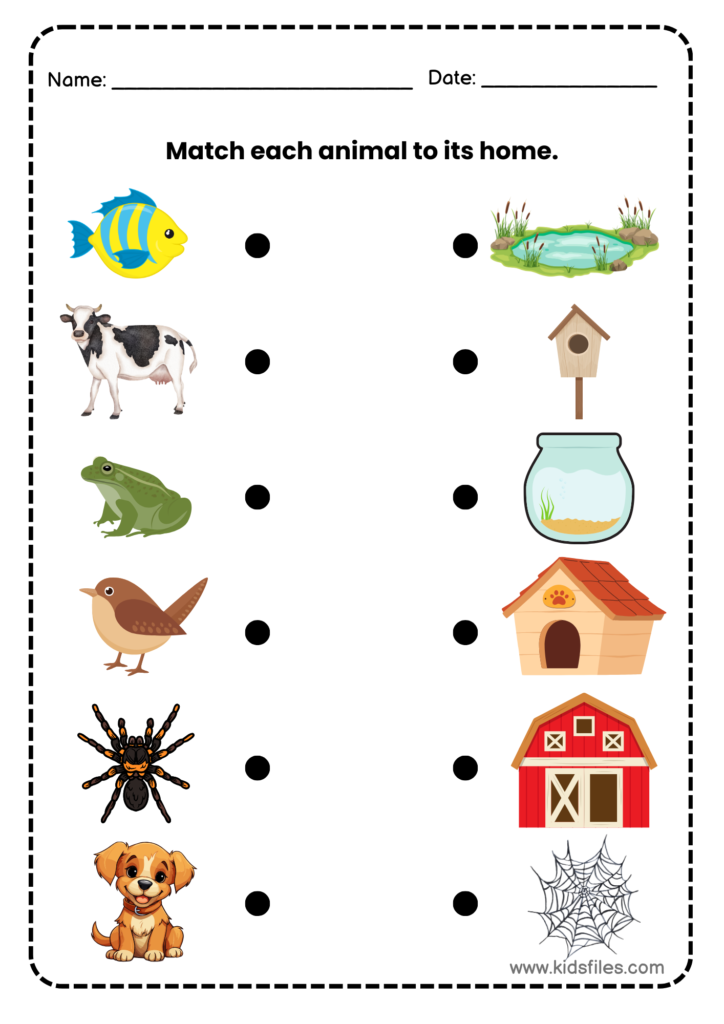
Animals live in different places, and learning about animal homes is a simple way to introduce the idea of habitats to young children. The animal homes worksheet asks children to look at each animal and match it to the place where it lives. Children can match familiar animals with homes such as a pond, birdhouse, fishbowl, doghouse, barn, or spider web. While completing the activity, teachers and parents can talk about why each animal needs a particular place to live. This activity does not need a long science explanation. For preschool and kindergarten learners, simple conversations are enough. You can talk about how fish need water, birds build nests, farm animals may live in a barn, and spiders make webs.
The worksheet can also lead to simple questions about animals children see around them. Ask where a pet dog sleeps, where birds live, or where they have seen fish. Connecting the worksheet to real experiences can help children understand the lesson more easily. Worksheets give children a chance to practice what they are learning, while videos give them another way to see and hear new information. After completing the worksheets, children can continue the lesson with a related animal video. A video can be used before the worksheets as an introduction or after the worksheets as a review. Children can listen to the animal names, look at the pictures, and repeat the words aloud. Teachers can also pause the video and ask children to name the animals they see.
A farm animal video works well with the animal worksheets because many of the animals shown in the printable activities are familiar farm animals. Children can listen to the names and then look for the same animals in their worksheets. After watching, you can ask children to name the animals they remember. They can also point to the matching pictures on the worksheet. This gives them another opportunity to hear, say, and recognize the same vocabulary. After children become familiar with animal names, they can begin learning about animal body parts. Different animals have different features that help them move, eat, and live in their environments.
Children may already know common words such as eyes, ears, nose, mouth, legs, and tail. They can then learn other words such as fins, scales, gills, wings, beak, and paws. Learning these words helps children describe and compare animals. A child may notice that a fish has fins while a bird has wings. A dog has paws, while a fish has fins. These simple comparisons help children observe how animals are different.
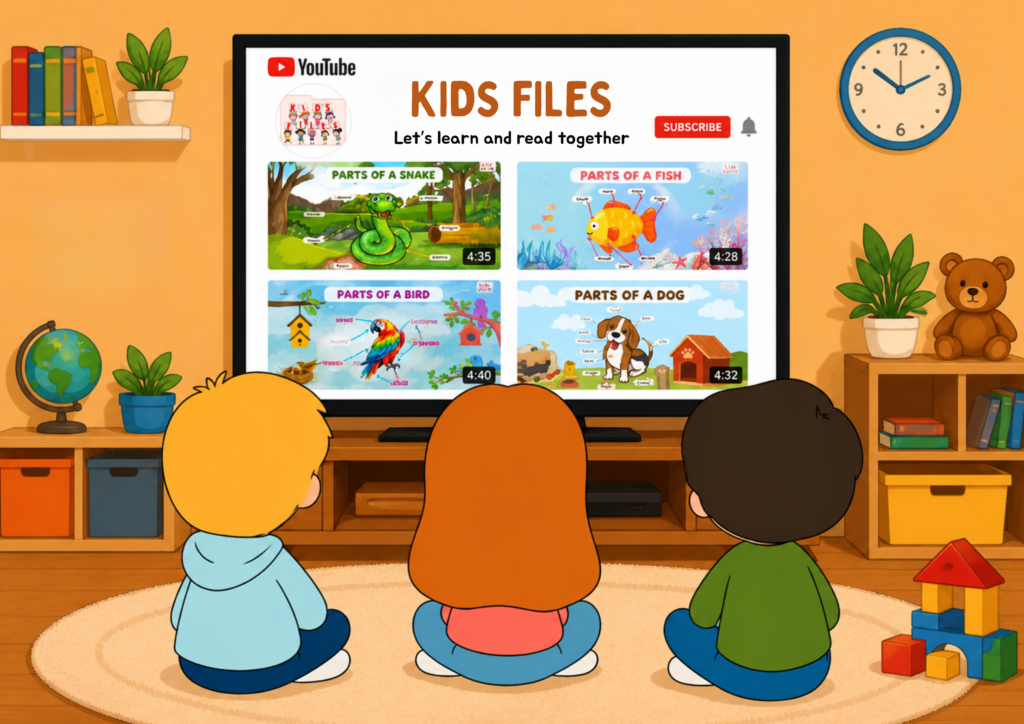
The Parts of a Fish video can be used as an extension of the Animal Worksheets lesson. Children can learn words such as eyes, mouth, fins, body, tail, scales, and gills. After watching the video, encourage children to look at pictures of other animals and compare their body parts. They can talk about which animals have tails, which animals have legs, and which animals have wings or fins. This does not need to be a formal activity. A simple conversation can help children use the new words they have learned. Animal learning can continue beyond one worksheet activity. Children can explore different animal topics depending on their age and interests.
Baby animals are a good topic for young learners because many children are interested in learning the names of animal babies. They can learn simple vocabulary such as puppy, kitten, chick, duckling, calf, and lamb. These words can be introduced through pictures, videos, and simple conversations. Sea animals are another interesting topic. Children can learn about animals such as whales, dolphins, sharks, octopuses, jellyfish, turtles, crabs, seals, starfish, and seahorses. Sea animal lessons can help children understand that not all animals live on land. You do not need to teach all of these topics in one lesson. Start with the Animal Worksheets and then choose another topic based on what your learners are interested in.
These printable worksheets can be used in different learning settings. Teachers can use them during a preschool or kindergarten science lesson, as independent work, or as a simple review activity. They can also be added to an animal-themed learning center. At home, parents can use one worksheet at a time. Children do not need to complete the whole set in one sitting. A short activity followed by a conversation about the animals can be enough for one learning session.
Homeschooling families can combine the worksheets with books, videos, drawing, and simple observation activities. For example, after completing an animal worksheet, children can draw their favorite animal and talk about where it lives and what it eats. The worksheets can also be used with the related Kids Files videos. You can begin with a video to introduce the topic, complete one or two worksheets for practice, and then review the animal names together. The goal is to give children different ways to learn the same topic. Some children enjoy watching videos, while others prefer looking at pictures or completing printable activities. Combining these resources gives young learners more opportunities to practice without making the lesson complicated. These Animal Worksheets can be used for learning animal names, recognizing pictures, matching animals, and learning about animal homes. Choose the pages that match your lesson and use them at your own pace.
Learning about animals can lead to many other science and vocabulary topics. After completing these worksheets, children can continue learning about animal body parts, baby animals, sea animals, and other topics through our printable activities and educational videos. Use the worksheets that match your child or students’ current learning needs. You can print the pages for classroom activities, homeschool lessons, review work, or simple learning time at home. Download your free Animal Worksheets and enjoy learning about animals together. Then explore more Kids Files worksheets, videos, and learning resources for your next lesson.