Free Visual Discrimination Worksheets
Looking for simple activities to help your child notice differences, match pictures, and pay attention to details? These free Visual Discrimination Worksheets are designed for preschool and kindergarten children and provide fun, hands-on practice through picture activities. Whether you’re a parent, classroom teacher, or homeschool family, these worksheets are easy to add to your daily routine.
Each page encourages children to look carefully and compare pictures. Instead of memorizing answers, children learn by observing shapes, objects, and patterns. This keeps learning fun while helping develop important early learning skills.
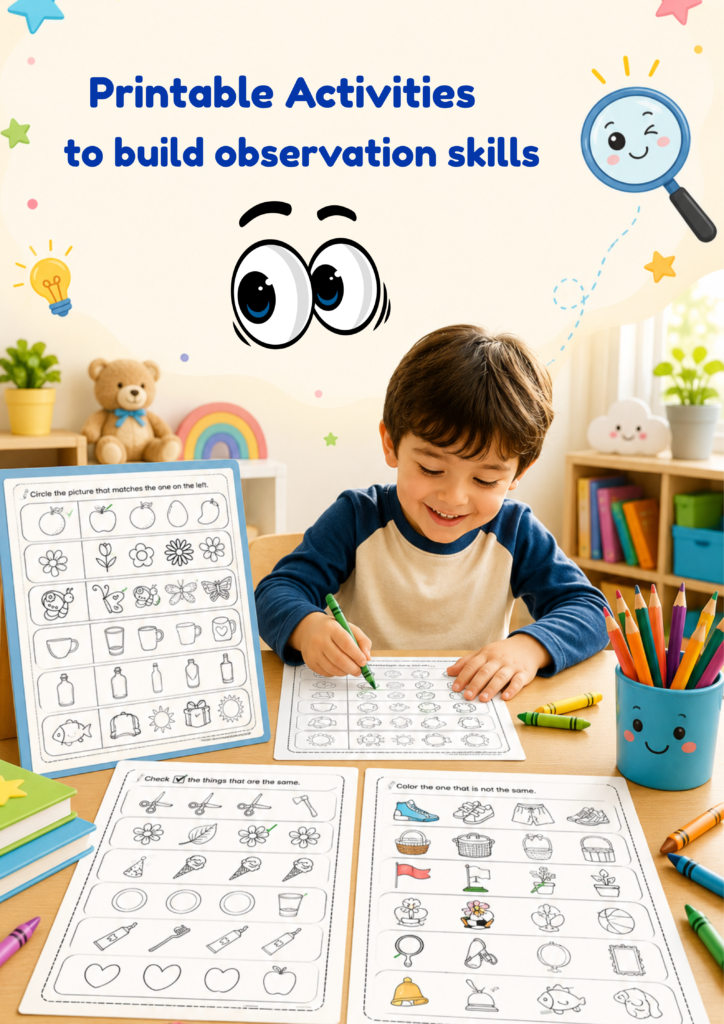
Visual discrimination is the ability to recognize similarities and differences between objects, pictures, letters, and shapes. This skill plays an important role in reading and writing. Children who can easily notice differences are better able to identify letters, recognize words, and avoid confusing similar shapes.
These worksheets give children opportunities to slow down and pay attention to details. Since each activity is simple and easy to understand, children can work at their own pace and feel successful as they complete each page. Young children learn best when they are actively involved. These Visual Discrimination Worksheets turn practice into an enjoyable activity instead of another worksheet to finish. Children enjoy searching for matching pictures and finding the item that is different.
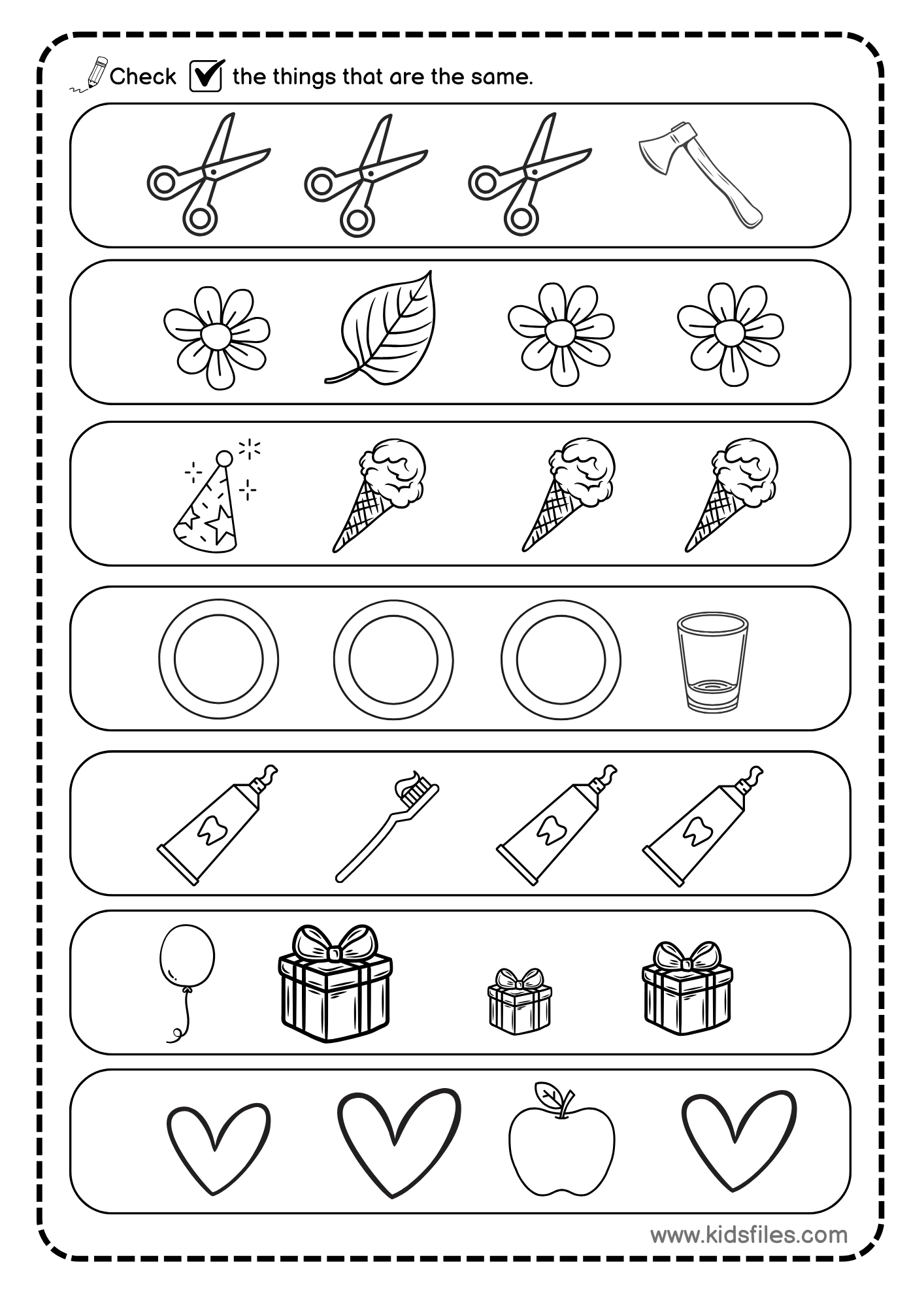
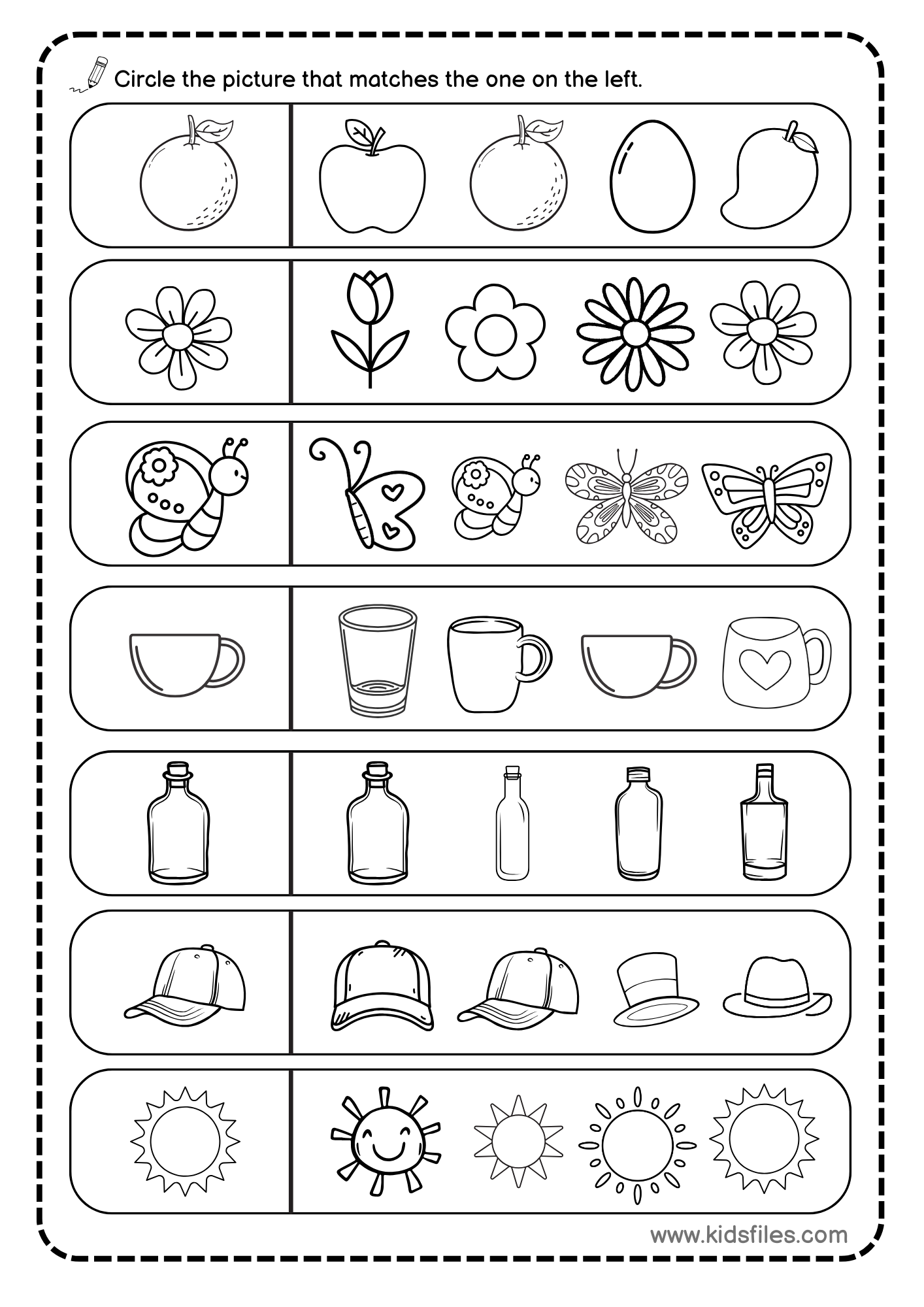
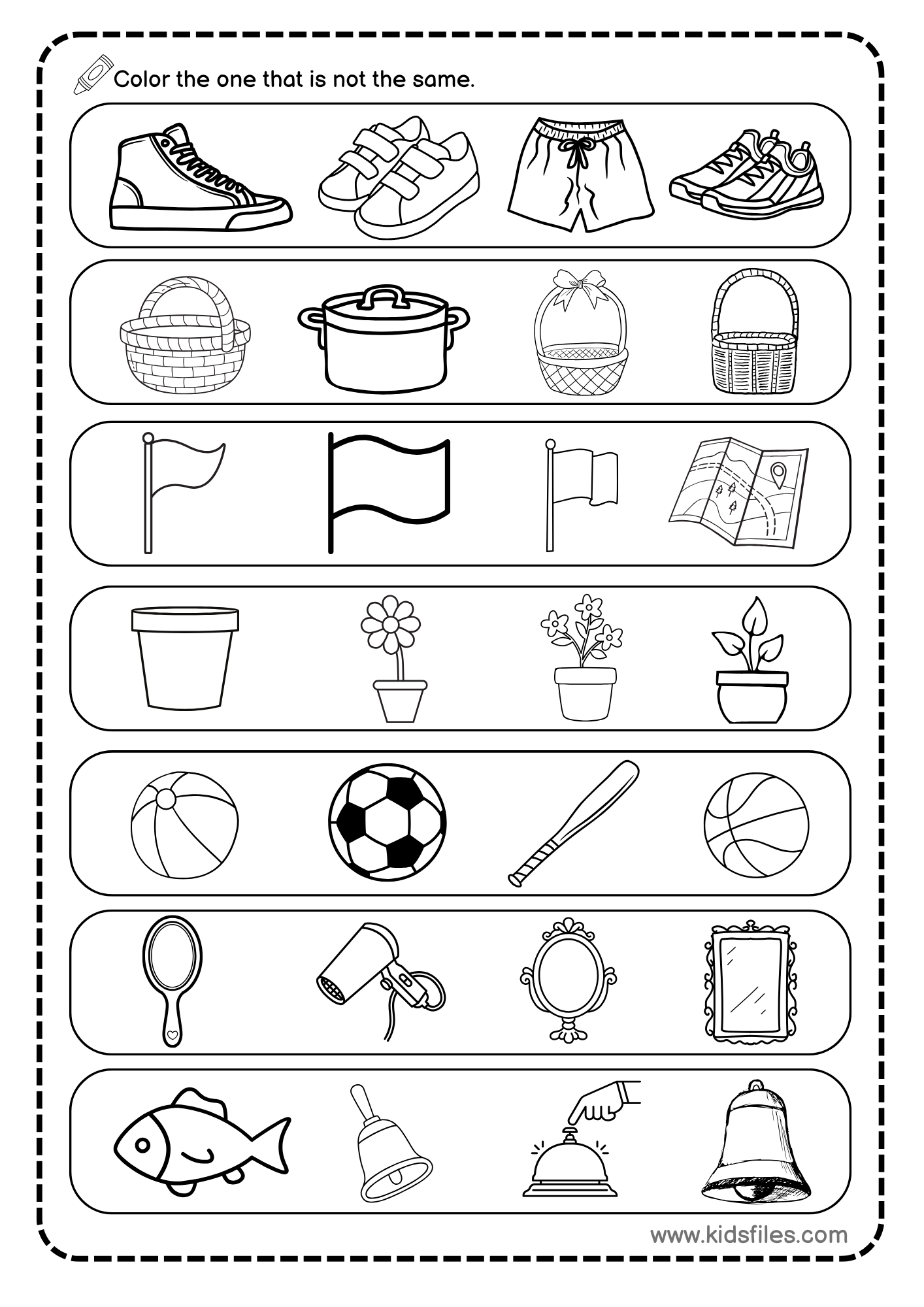
Visual discrimination is an important skill that helps children notice similarities and differences between pictures, letters, numbers, and objects. Children use this skill every day when learning to read, write, and recognize patterns. Simple activities that encourage careful observation help young learners become more confident during early learning. Children who can identify differences between shapes and pictures are also better prepared for alphabet recognition and early reading activities. These skills support memory, attention, and concentration, which are important for success in preschool and kindergarten. Small activities done regularly can make a big difference over time.
Visual discrimination skills are used in many daily activities. Children compare colors, match shapes, recognize letters, and identify objects that are the same or different. These abilities help them during puzzles, games, reading activities, and even simple classroom tasks. As children practice these skills, they become more comfortable following directions and solving simple problems independently. Activities like these also encourage patience and attention to detail while making learning enjoyable.
Children who enjoy matching pictures and spotting differences may also benefit from our:
- Auditory Discrimination Worksheets for listening and sound recognition activities.
- Alphabet Letters Worksheets for letter recognition practice.
- Phonics and Reading Activities to build beginning literacy skills.
- ESL Lesson Plan Guide for simple classroom and homeschool ideas.
Visual discrimination also supports visual memory, concentration, and attention to detail. These skills help children stay focused during learning activities and prepare them for reading, writing, and other early literacy tasks. Paying attention to differences and similarities helps children build important skills that support future learning.
Parents and teachers do not need long lessons to help children develop observation skills. A few minutes of practice each day can make learning enjoyable and manageable. These worksheets can be used during quiet time, morning work, independent practice, or as part of a homeschool routine. Many children enjoy searching for matching pictures and spotting differences because the activities feel more like games than schoolwork. This keeps children interested while giving them opportunities to practice important thinking skills.
Young children naturally learn by exploring and observing the world around them. Activities that encourage children to compare pictures, notice patterns, and identify differences help strengthen problem-solving and critical thinking skills. These experiences also encourage patience and careful attention to details. Over time, children become more independent and comfortable completing activities on their own. Small accomplishments help create positive learning experiences and build a strong foundation for future learning.
These printable worksheets are perfect for home, classroom, and homeschool use. Teachers can use them for morning work, literacy centers, independent practice, or small-group activities. Parents can add one page each day to their learning routine. These worksheets do more than keep children busy. As children carefully examine each picture, they are strengthening concentration and visual memory. They practice paying attention to details and following directions while completing each page.
Hands-on activities help children stay interested and enjoy learning. When activities are enjoyable, children are more likely to participate and remember what they have learned. Simple hands-on experiences like these support early literacy development and prepare children for future reading and writing activities. Clear directions and familiar activities help children complete tasks more independently. As children continue practicing, they gradually become more independent and comfortable following simple directions on their own.
Visual skills and listening skills work together during early learning. After practicing with these Visual Discrimination Worksheets, children can continue building listening skills with our Auditory Discrimination Worksheets.
Auditory discrimination activities help children recognize and distinguish sounds, which supports phonics and language development. Combining visual and listening activities gives children a well-rounded learning experience and helps strengthen important school readiness skills. Children do not need expensive materials or complicated lessons to learn. Simple printable activities often create the best learning experiences. Whether you’re looking for a quiet afternoon activity, a literacy center idea, or extra practice at home, these Visual Discrimination Worksheets provide meaningful learning in a fun and easy way.
Because the worksheets are easy to print and prepare, they fit naturally into different learning routines. Parents, teachers, and homeschool families can choose activities that match a child’s pace and learning needs. Many of the pages can be completed independently, while adults provide support when needed.
Children do not need expensive materials or complicated lessons to develop important early learning skills. Simple activities often provide meaningful learning experiences. When learning feels fun and manageable, children are more likely to stay interested and continue exploring new skills.
Download your free Visual Discrimination Worksheets today and enjoy simple hands-on activities with your little learners.
🗂️ Get Your Free Visual Discrimination Worksheets
Teach Basic Shapes with Free Printable Worksheets
All About Animals: Free Worksheets and Learning Videos for
Short /a/ Vowel Worksheets for Early Readers